When Martin Luther nailed his proclamation to a Church door he began a fine tradition of citizens challenging the status quo and the elites through the power of the written word.
On the 18th of January this tradition was continued as over 75,000 websites launched a protest against the bills SOPA and PIPA.
Many opted to simply blackout their site and instead display information about the two bills. Some, like Google, continued to function but had prominent links on their homepage on how to oppose the bill. Perhaps the one with the most impact was Wikipedia’s blackout - it reportedly led to 8 million US citizens looking up their representatives.
If you have missed the debate about SOPA I encourage you to check out this excellent video so you can bring yourself up to speed.
If you prefer to read then reddit’s FAQ is a good place to start http://www.reddit.com/help/faqs/sopa#WhatisSOPA
This protest was a dramatic reversal of power from the news elites to the people - America's mainstream media had, by and large, ignored the Internets’ objection to the two bills because their parent companies were those who would benefit most from the new legislation. This is a perfect example of crony capitalism and the dangers of press being controlled by a very narrow set of special interests.
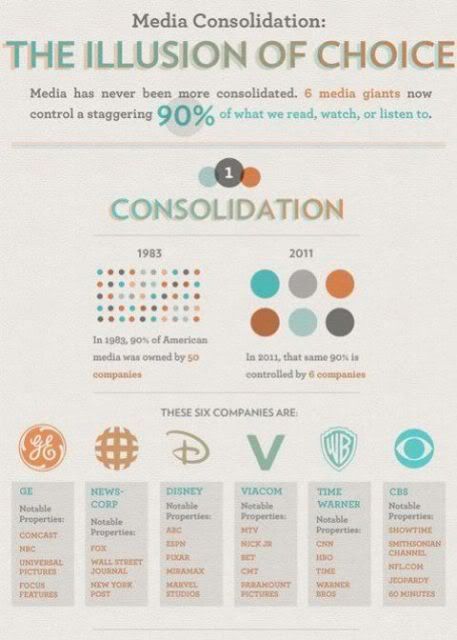
It seems obvious to state but: news corporations owned by entertainment giants will be limited when discussion of intellectual property rights, file downloading and open access arises. They desire passive consumption and the Internet allows for creative re-imagination. The protest directly highlighted this creative side of the net.
What is interesting to consider is how the protest took place and the global impact it had - Wikipedia effectively denied access to their English language website, reddit denied access to their entire network. They were giving us a taste of the great firewall. The blackouts demonstrated how important access to online information is and how basic a right we in the west see this as. It also illustrates how a global network can still be seriously impacted by the world’s declining super power. The globalisation of the Internet still appears to be tied to the globalised control American can exert.
The debate about piracy is an ongoing one - measures to tackle it are going to be introduced - the danger is in government passing bills written by Hollywood that would crush free speech and creativity. More are coming, ACTA for example, and it is clear that the entertainment industry is going to continue to use the US legislative system as a delivery system for their goals.
The success of the blackout has been the shelving of these bills but people must remain vigilant. The energy required by ordinary people to motivate against these two threats was monumental. We all have real jobs, families and lives to live - lobbyists exist to create influence with government and push these bills. Senators and Congressmen have all day to be courted, to be bought. Perhaps what the Internet needs is its own set of lobbyists funded by people from around the world who will campaign against censorship and for an open and free society.
Showing posts with label Google. Show all posts
Jan 22, 2012
I have a dream... about Internet lobbyists
Nov 20, 2011
iAfrOS: Africa, smartphones and the internet
Planning to get a new smartphone? You will probably consider an iPhone, a Samsung Galaxy, maybe a Blackberry or an HTC? Unless, of course, you happen to live in rural Africa. Then there is 2 in 3 chance that you will settle for a Symbian-based Nokia, or if you're not a fan of the once-omnipotent Finnish brand, you will most likely get yourself a basic Sony Ericsson or Samsung phone. Not to mention that there is only a 15% of chance that you will be getting any smartphone at all.
A parallel smartphone war
All of the statistics indicate that price is by far the largest factor when it comes to picking a smartphone in Africa. Most households have low income (at least by Western standards), while the majority of the Smartphones available on the market are priced at levels which make even a comfortable middle class American think twice before getting "the newest model". This explains the popularity of Nokia and Sony Ericsson gadgets, which might not be very advanced, but are definitely priced competitively.
As smartphone penetration is still low while the demand is high, no wonder that there are other companies which would like to tap into this market. Huawei created IDEOS, which is sold for $80 and is proving popular. Google has recently announced that together with its partner Motorola it plans to create its own cheap smartphone too (it is supposed to cost less than $80). This parallel "smartphone war" could further damage sales at Nokia, a loser in the Western gizmo race but currently the champion of the market for cheap smartphones.
WorldWideWeb?
While the likes of Nokia and Huawei are aiming at simply selling their mobile phones, Google has a greater ambition: connecting them to the internet. Internet usage across the continent is still quite low, but is surging quickly thanks to the growing use of phones with web capabilities. According to Intelligent Life magazine, there are currently around 89 million mobile phones with online accessibility in Africa (that's just 80 per 1000 people).
More devices with web access mean more business for Google, which already ranks as the second most popular website in Africa (after Facebook), according to the State of the Mobile Web report created by the team behind the Opera mobile browser. The Mountain View giant sees Africa as its next boom market, and promotes the internet there with initiatives such as "Get African Business Online" or the "Google Trader" app. More advanced smartphones could now allow its cloud-based services to become more accessible, and with the increasing demand for memory (relatively low in mobile phones) Google's cloud could be a hit.
Everyone benefits
Internet accessed through mobile phones could empower everybody, not just Google. There are many stories of how connectivity can transform people's lives. In October 2011, The Economist ran a story about how Ghana's shea nut pickers are benefiting from a smartphone app developed by the German software maker SAP. This example illustrates that the business interests of the tech giants and normal Africans can go hand in hand: as the harvesters' productivity and profits rise, SAP will demonstrate to its users the benefits of its technology, and hopes to eventually charge for the service. Everyone benefits.
There are many stories about how mobile internet can make life easier. Increasing productivity by adopting business IT solutions like the one in Ghana is one end of the story, and making life easier for consumers and 'mass' businesses alike is another. According to Craige Fleischer, the Regional Director for Southern Africa at RIM, smartphones can make it easier for people to shop and use financial services online, while driving new business to shops, banks and advertisers.
Internet connectivity isn't just about business though. It brings entertainment as well as profits, and this is as true in Africa as anywhere else. According to Opera's State of the Mobile Web report, game and music downloading and social networking are on average the most popular online activities among the smartphone-wielding Africans. However, search and email are also widely used, and these service can have business as well as entertainment purposes.
The bottom line
Africa is the continent with the lowest internet access levels, yet this is changing quickly due to the widening access to smartphones. Back in 2000, the online penetration levels in Sub-Saharan Africa stood at mere 0.6%. By 2010, this number rose to 10.5% (or 1/3 of the world average). Wider access to smartphones and the internet benefits individuals, small business and large corporations alike, and this realisation is the key to a common success. Supplying Africa with cheaper phones is definitely a good step forward. As the competition increases, the gadgets will get more and more technologically advanced, and thus will be able to provide more efficient business and entertainment tools to their users.
A parallel smartphone war
All of the statistics indicate that price is by far the largest factor when it comes to picking a smartphone in Africa. Most households have low income (at least by Western standards), while the majority of the Smartphones available on the market are priced at levels which make even a comfortable middle class American think twice before getting "the newest model". This explains the popularity of Nokia and Sony Ericsson gadgets, which might not be very advanced, but are definitely priced competitively.
As smartphone penetration is still low while the demand is high, no wonder that there are other companies which would like to tap into this market. Huawei created IDEOS, which is sold for $80 and is proving popular. Google has recently announced that together with its partner Motorola it plans to create its own cheap smartphone too (it is supposed to cost less than $80). This parallel "smartphone war" could further damage sales at Nokia, a loser in the Western gizmo race but currently the champion of the market for cheap smartphones.
WorldWideWeb?
While the likes of Nokia and Huawei are aiming at simply selling their mobile phones, Google has a greater ambition: connecting them to the internet. Internet usage across the continent is still quite low, but is surging quickly thanks to the growing use of phones with web capabilities. According to Intelligent Life magazine, there are currently around 89 million mobile phones with online accessibility in Africa (that's just 80 per 1000 people).
More devices with web access mean more business for Google, which already ranks as the second most popular website in Africa (after Facebook), according to the State of the Mobile Web report created by the team behind the Opera mobile browser. The Mountain View giant sees Africa as its next boom market, and promotes the internet there with initiatives such as "Get African Business Online" or the "Google Trader" app. More advanced smartphones could now allow its cloud-based services to become more accessible, and with the increasing demand for memory (relatively low in mobile phones) Google's cloud could be a hit.
Everyone benefits
Internet accessed through mobile phones could empower everybody, not just Google. There are many stories of how connectivity can transform people's lives. In October 2011, The Economist ran a story about how Ghana's shea nut pickers are benefiting from a smartphone app developed by the German software maker SAP. This example illustrates that the business interests of the tech giants and normal Africans can go hand in hand: as the harvesters' productivity and profits rise, SAP will demonstrate to its users the benefits of its technology, and hopes to eventually charge for the service. Everyone benefits. There are many stories about how mobile internet can make life easier. Increasing productivity by adopting business IT solutions like the one in Ghana is one end of the story, and making life easier for consumers and 'mass' businesses alike is another. According to Craige Fleischer, the Regional Director for Southern Africa at RIM, smartphones can make it easier for people to shop and use financial services online, while driving new business to shops, banks and advertisers.
Internet connectivity isn't just about business though. It brings entertainment as well as profits, and this is as true in Africa as anywhere else. According to Opera's State of the Mobile Web report, game and music downloading and social networking are on average the most popular online activities among the smartphone-wielding Africans. However, search and email are also widely used, and these service can have business as well as entertainment purposes.
The bottom line
Africa is the continent with the lowest internet access levels, yet this is changing quickly due to the widening access to smartphones. Back in 2000, the online penetration levels in Sub-Saharan Africa stood at mere 0.6%. By 2010, this number rose to 10.5% (or 1/3 of the world average). Wider access to smartphones and the internet benefits individuals, small business and large corporations alike, and this realisation is the key to a common success. Supplying Africa with cheaper phones is definitely a good step forward. As the competition increases, the gadgets will get more and more technologically advanced, and thus will be able to provide more efficient business and entertainment tools to their users.
Labels:
Africa,
emerging markets,
Google,
internet,
smartphone
Oct 28, 2011
Google almighty?
It seems difficult to disagree with John Batelle’s tech-maxim that “the only thing Google has failed to do, so far, is fail”. Since making the statement in 2009, Google has pioneered Google Googles, perfected Google Maps and leveraged its Gmail empire in the ongoing Cloud Battle. Add quarterly profit increases that have exceed 20% since its IPO in the pre-crunch days of 2004 to that and any attempt to disagree seems futile. Cut your losses.
However, Google is not flawless: Harrison Weber of The Next Web calculated that Google fails at around 36% of all its projects. If this is surprising, Weber’s claim that Google’s social media failures amount to a staggering 90% is almost incredible.
GConcept still relevant?
Part of the reason why Google hasn’t yet managed to crack the social web (except for YouTube, which was acquired – rather than developed internally – for a whopping $1.65 billion) lies in its very nature. If Facebook is a suave lounge or cozy café, Google is a reliable, uncomplicated GPS system. Google was founded as, and remains to this day, primarily a search engine – both in terms of the extra features and because the search engine is the default starting point. A search engine,(like most other engines) cannot be described as a social thing. Why? Searching in the age of information is a means to an end. Weaving through the web’s endless information is tiring, not the basis of a fun communal activity.
Many claim that it is only a question of time until searching the web will gain a social dimension. Google would then be at serious risk of loosing its monopoly to social media platforms. These seem keen on getting a share in the hugely profitable web search market, whilst their main businesses – virtually connecting people – can only keep growing. Faced with this, Google could soon feel like an aging rockstar, desperately trying to hide the wrinkles and ‘connect’ with the younger generation.
The social business
Companies making hardware or flower pots have it easy: the better their product, the more likely they are to win over the competition. Consumers tend to be flexible when it comes to picking most products, and don’t hesitate to switch to a new provider if they feel they can get a better deal. This is perhaps best demonstrated by Apple’s innovation being based on improving existing products (as discussed below).
This isn’t the case with Social Networks. People use Facebook to interact with friends and potential friends; the better the forum for this, the more users ‘like’ the service. Since social networks are essentially communities, it is crucial that members regularly contribute. Users will stick with the platform as long as this is ensured. Therefore, despite Facebook seemingly getting a weekly facelift, there is no great need to innovate so long it ensures that existing members keep posting in new groups and new members sign up.
Picking the right cherries
Google boasts some truly impressive and successful products. Google Apps, Gmail, Google Analytics or Cloud Storage are all thriving in terms of popularity. They share other also all cloud-based services, and therefore especially appealing to business users. Whey then is Google seemingly digressing from its current online-starlets and attempting to break into social media?
Google spent nearly $600 million on developing Google+. The service is criticized internally and will be lucky to ever surpass Myspace.com in terms of active users. This is not an extravagant sum for hi-tech, but it light of Google spending only $3 billion on R&D a year, it’s clear that Google means business. $600 million could buy 9 years of R&D at Salesforce, or 600 Ferrari Enzos. Could Google be better off sticking to what it does best then? Why is social media so important to Google?
It’s all about the money
Even if Facebook doesn’t become a major player in the online search market, it still manages to cash in on adverts. For the world’s largest add broker, this is annoying to say the least. Facebook is on track to exceed $2billion of advert revenue in 2011, or 28% of Google’s marketing revenues. Beyond that, Facebook’s user base is constantly growing, making it an increasingly attractive advertising market.
While it is only natural that Google’s trying to shave off some of these staggering profits, the intense focus on social media is puzzling. As current and potential profits are metaphorically in the clouds, the only explanation that comes to mind is that Google would like to dominate the internet. Increasing convergence would suggest that this is necessary, however, with Google+, Google runs the risk of starting a war it cannot win. It remains to be seen whether this surge into social networking will prove more damaging than valuable to the brand.
The Bottom Line
What are Google’s options in light of all this? This depends on what people want, or what people are told that they want, to quote the late Steve Jobs. First of all, users won’t necessarily switch to a more ‘social search’. Searching through the social media has some downsides, including the risk of being trapped in a bubble of highly targeted content. Add to that that Google is the number one search engine in all U.S. States - bar Iowa - , and its fairly certain that Google will continue to cash in on online adds, even if it falls short of Facebook’s profits.
If, however, online search does go 2.0, Google will have to seek other sources of revenue. The safest bet seems to be the cloud, or possibly a more specific social networking site, such as LinkedIn. Either way, Google failed to win the social media market back in 2004 when Facebook piped Myspace to become people’s favorite online procrastination, and is now paying the price for it. This is a yet another proof that in the IT market, right timing is king, and that missing out on key market developments sets anyone up for failure.
However, Google is not flawless: Harrison Weber of The Next Web calculated that Google fails at around 36% of all its projects. If this is surprising, Weber’s claim that Google’s social media failures amount to a staggering 90% is almost incredible.
GConcept still relevant?
Part of the reason why Google hasn’t yet managed to crack the social web (except for YouTube, which was acquired – rather than developed internally – for a whopping $1.65 billion) lies in its very nature. If Facebook is a suave lounge or cozy café, Google is a reliable, uncomplicated GPS system. Google was founded as, and remains to this day, primarily a search engine – both in terms of the extra features and because the search engine is the default starting point. A search engine,(like most other engines) cannot be described as a social thing. Why? Searching in the age of information is a means to an end. Weaving through the web’s endless information is tiring, not the basis of a fun communal activity.
Many claim that it is only a question of time until searching the web will gain a social dimension. Google would then be at serious risk of loosing its monopoly to social media platforms. These seem keen on getting a share in the hugely profitable web search market, whilst their main businesses – virtually connecting people – can only keep growing. Faced with this, Google could soon feel like an aging rockstar, desperately trying to hide the wrinkles and ‘connect’ with the younger generation.
The social business
Companies making hardware or flower pots have it easy: the better their product, the more likely they are to win over the competition. Consumers tend to be flexible when it comes to picking most products, and don’t hesitate to switch to a new provider if they feel they can get a better deal. This is perhaps best demonstrated by Apple’s innovation being based on improving existing products (as discussed below).
This isn’t the case with Social Networks. People use Facebook to interact with friends and potential friends; the better the forum for this, the more users ‘like’ the service. Since social networks are essentially communities, it is crucial that members regularly contribute. Users will stick with the platform as long as this is ensured. Therefore, despite Facebook seemingly getting a weekly facelift, there is no great need to innovate so long it ensures that existing members keep posting in new groups and new members sign up.
Picking the right cherries
Google boasts some truly impressive and successful products. Google Apps, Gmail, Google Analytics or Cloud Storage are all thriving in terms of popularity. They share other also all cloud-based services, and therefore especially appealing to business users. Whey then is Google seemingly digressing from its current online-starlets and attempting to break into social media?
Google spent nearly $600 million on developing Google+. The service is criticized internally and will be lucky to ever surpass Myspace.com in terms of active users. This is not an extravagant sum for hi-tech, but it light of Google spending only $3 billion on R&D a year, it’s clear that Google means business. $600 million could buy 9 years of R&D at Salesforce, or 600 Ferrari Enzos. Could Google be better off sticking to what it does best then? Why is social media so important to Google?
It’s all about the money
Even if Facebook doesn’t become a major player in the online search market, it still manages to cash in on adverts. For the world’s largest add broker, this is annoying to say the least. Facebook is on track to exceed $2billion of advert revenue in 2011, or 28% of Google’s marketing revenues. Beyond that, Facebook’s user base is constantly growing, making it an increasingly attractive advertising market.
While it is only natural that Google’s trying to shave off some of these staggering profits, the intense focus on social media is puzzling. As current and potential profits are metaphorically in the clouds, the only explanation that comes to mind is that Google would like to dominate the internet. Increasing convergence would suggest that this is necessary, however, with Google+, Google runs the risk of starting a war it cannot win. It remains to be seen whether this surge into social networking will prove more damaging than valuable to the brand.
The Bottom Line
What are Google’s options in light of all this? This depends on what people want, or what people are told that they want, to quote the late Steve Jobs. First of all, users won’t necessarily switch to a more ‘social search’. Searching through the social media has some downsides, including the risk of being trapped in a bubble of highly targeted content. Add to that that Google is the number one search engine in all U.S. States - bar Iowa - , and its fairly certain that Google will continue to cash in on online adds, even if it falls short of Facebook’s profits.
If, however, online search does go 2.0, Google will have to seek other sources of revenue. The safest bet seems to be the cloud, or possibly a more specific social networking site, such as LinkedIn. Either way, Google failed to win the social media market back in 2004 when Facebook piped Myspace to become people’s favorite online procrastination, and is now paying the price for it. This is a yet another proof that in the IT market, right timing is king, and that missing out on key market developments sets anyone up for failure.
Labels:
company analysis,
Google,
Google+,
social media
Subscribe to:
Posts (Atom)
